What Is Mung Bean Starch?
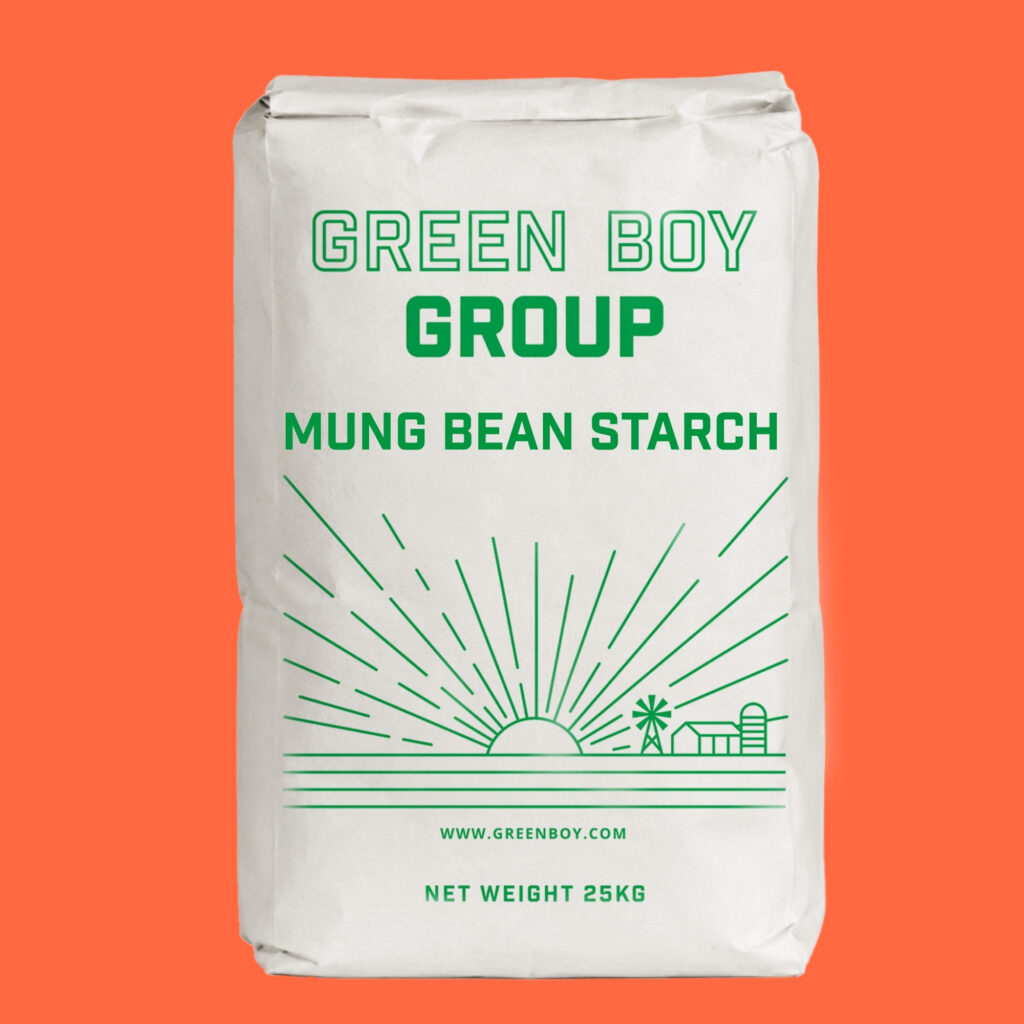
Mung Bean Starch is a plant-based carbohydrate ingredient extracted from mung beans (Vigna radiata) through a wet milling and separation process. The starch fraction is isolated from the protein and fiber components, purified, and dried into a fine white powder that delivers strong thickening and texturizing performance in food manufacturing applications.
Mung bean starch is highly valued in Asian and global food applications for its ability to create clear gels, elastic textures, and smooth mouthfeel. It is commonly used in noodles, starch-based sheets, confectionery systems, and gluten-free formulations where unique texture performance is required.
At Green Boy, we offer Mung Bean Starch in Non-GMO options to support manufacturers developing noodles, snacks, desserts, sauces, and functional food systems.
Functionalities
Mung Bean Starch provides a range of functional benefits that make it particularly useful in texture-driven applications.
Thickening Agent
Mung bean starch is used as a thickening ingredient in sauces, soups, and processed foods. It develops viscosity during heating and contributes to stable, consistent textures.
Gel Formation
One of the defining characteristics of mung bean starch is its ability to form clear, firm, and elastic gels. This makes it especially valuable in noodles, starch sheets, and structured food systems.
Texture Development
Mung bean starch contributes elasticity, chewiness, and smooth mouthfeel in finished products. It is widely used where a resilient and bouncy texture is desired.
Film Formation
The starch can form flexible films, making it useful in noodle sheets, wrappers, and specialty starch-based products.
Moisture Management
Mung bean starch helps retain moisture and maintain product integrity, supporting softness and stability in finished foods.
Binding Functionality
In formulated foods, mung bean starch helps bind ingredients together and improve structural cohesion.
Processing Stability
Mung bean starch performs reliably under controlled heating and cooling processes, particularly in gel-based and noodle manufacturing systems.
Significance of Mung Bean Starch vs Other Native Starches
Mung bean starch is often selected for applications where elasticity, clarity, and gel strength are critical. Compared to more common starches like corn or potato, it offers a distinctive texture profile that is difficult to replicate with other starch systems.
It is especially valued in noodle production and specialty starch-based foods due to its ability to create strong, resilient gel structures with a smooth finish. This makes it an important ingredient in both traditional Asian applications and modern food innovation.
At Green Boy, we support manufacturers in using mung bean starch to achieve specialized texture performance and product differentiation in starch-based food systems.
Texture and Taste
Texture
Mung Bean Starch is highly valued for its unique texture-forming capabilities.
Food manufacturers commonly use mung bean starch to:
- Create elastic noodles and starch-based strands
- Improve chewiness and bounce in structured foods
- Form clear gels in desserts and confectionery
- Enhance smoothness in sauces and fillings
- Support flexible starch films and sheets
Its ability to deliver elastic and resilient textures makes it a specialty ingredient in texture-focused applications.
Taste
Mung bean starch is known for its neutral sensory profile.
Typical sensory characteristics include:
- Neutral taste
- No sweetness
- Clean finish
- Minimal flavor impact
Its neutrality allows it to function purely as a structural and textural ingredient.
Certifications
Organic Mung Bean Starch
Green Boy offers Organic Mung Bean Starch for manufacturers seeking certified organic ingredient solutions. Organic mung bean starch supports clean-label product development and is used in specialty and natural food applications.
Non-GMO Mung Bean Starch
Green Boy also offers Non-GMO Mung Bean Starch to support manufacturers seeking ingredient transparency and Non-GMO product positioning. Non-GMO mung bean starch is commonly used in clean-label and traditional food systems.
Additional Certification Options
Depending on product specifications and market requirements, Mung Bean Starch may also be available with certifications such as:
- Vegan
- Kosher
- Halal
- Gluten-Free
Our team can help identify the appropriate specification and certification requirements for your formulation and target market.
Applications
Mung Bean Starch is commonly incorporated into:
- Asian noodles
- Glass noodles and vermicelli
- Starch-based sheets and wrappers
- Confectionery products
- Desserts and gels
- Soups and sauces
- Gluten-free specialty foods
- Processed foods
- Snack applications
- Functional starch systems
At Green Boy, we work with food and beverage manufacturers to supply Organic and Non-GMO Mung Bean Starch that supports gel formation, texture development, and specialty starch functionality across a wide range of commercial applications.