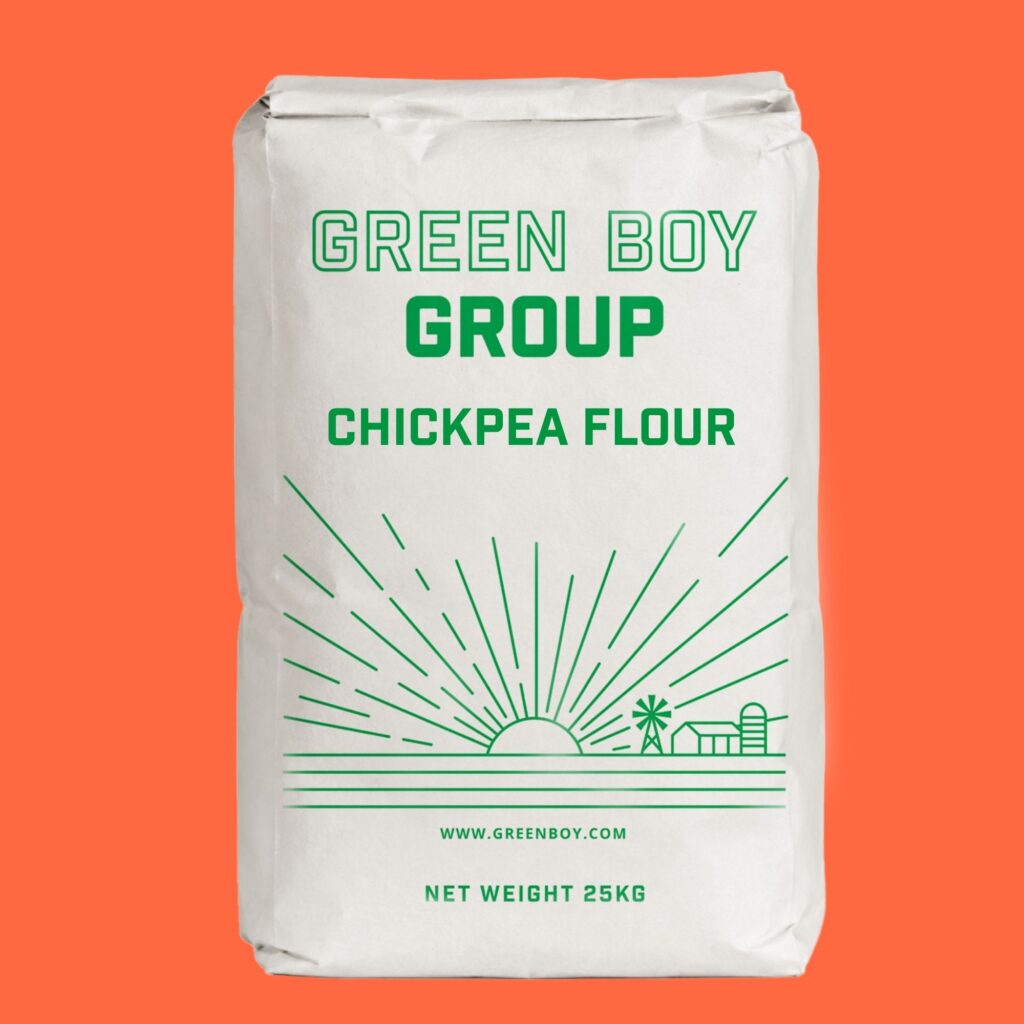
What Is Chickpea Flour?
Chickpea Flour (also known as gram flour or besan in certain markets) is a plant-based flour made from finely milled dried chickpeas (Cicer arietinum). It is a high-protein, high-fiber ingredient widely used in food manufacturing as a functional, gluten-free alternative to wheat-based flours.
Chickpea flour is commonly used in clean-label, plant-based, and gluten-free formulations. It performs well in bakery systems, snacks, batters, extruded products, and savory applications where structure, nutrition, and binding functionality are required.
At Green Boy, we offer Chickpea Flour in Non-GMO options to support manufacturers developing nutrient-dense, clean-label food products.
Functionalities
Chickpea Flour provides both nutritional and functional benefits in food manufacturing systems.
Protein Enrichment
Chickpea flour is naturally high in plant-based protein, making it valuable for protein-enhanced and plant-forward formulations.
Fiber Contribution
It contains significant dietary fiber, supporting “source of fiber” and “high fiber” positioning depending on formulation levels.
Binding Functionality
Chickpea flour helps bind ingredients together in batters, doughs, and mixed systems, improving structural integrity.
Water Absorption
It absorbs water effectively, supporting dough formation, viscosity, and batter consistency.
Emulsification Support
Its natural starch-protein matrix can assist in stabilizing emulsions in certain food applications.
Texture Development
It contributes structure, density, and bite in baked goods, snacks, and savory systems.
Browning Enhancement
Chickpea flour supports Maillard reaction development, improving color and flavor in baked and fried applications.
Significance of Chickpea Flour in Food Manufacturing
Chickpea Flour is widely used in modern food systems due to its dual role as a nutritional and functional ingredient. Unlike refined starches, it provides protein, fiber, and structure in a single ingredient system.
It is especially important in gluten-free and plant-based formulations where manufacturers need both binding functionality and nutritional density. Chickpea flour is also widely used in snack systems, batters, and bakery applications where crispness and structure are key.
At Green Boy, we position chickpea flour as a multifunctional plant-based flour that supports both clean-label formulation and strong sensory performance.
Texture and Taste
Texture
Chickpea Flour plays a key role in shaping texture across multiple applications. Manufacturers commonly use it to:
- Add structure in gluten-free baked goods
- Improve crispness in fried and baked snacks
- Enhance binding in batters and doughs
- Support density in savory applications
- Improve bite in extruded systems
Taste
Chickpea flour has a distinct but adaptable flavor profile.
Typical sensory characteristics include:
- Mild nutty taste
- Slight earthy undertone
- Savory profile in cooked systems
- Strong flavor integration with spices and seasonings
Certifications
Non-GMO Chickpea Flour
We also offer Non-GMO Chickpea Flour to support ingredient transparency and clean-label positioning in modern food systems.
Additional Certification Options
Depending on specification, Chickpea Flour may also be available with:
- Vegan
- Kosher
- Halal
- Gluten-Free
Applications
Chickpea Flour is commonly used in:
- Gluten-free bakery products
- Snacks and crackers
- Batters and coatings
- Extruded snack systems
- Plant-based foods
- Savory mixes and blends
- Flatbreads and tortillas
- Functional food systems
- High-protein formulations
- Clean-label prepared foods
At Green Boy, we supply Non-GMO Chickpea Flour to support protein enrichment, binding functionality, texture development, and clean-label formulation performance across a wide range of food manufacturing applications.