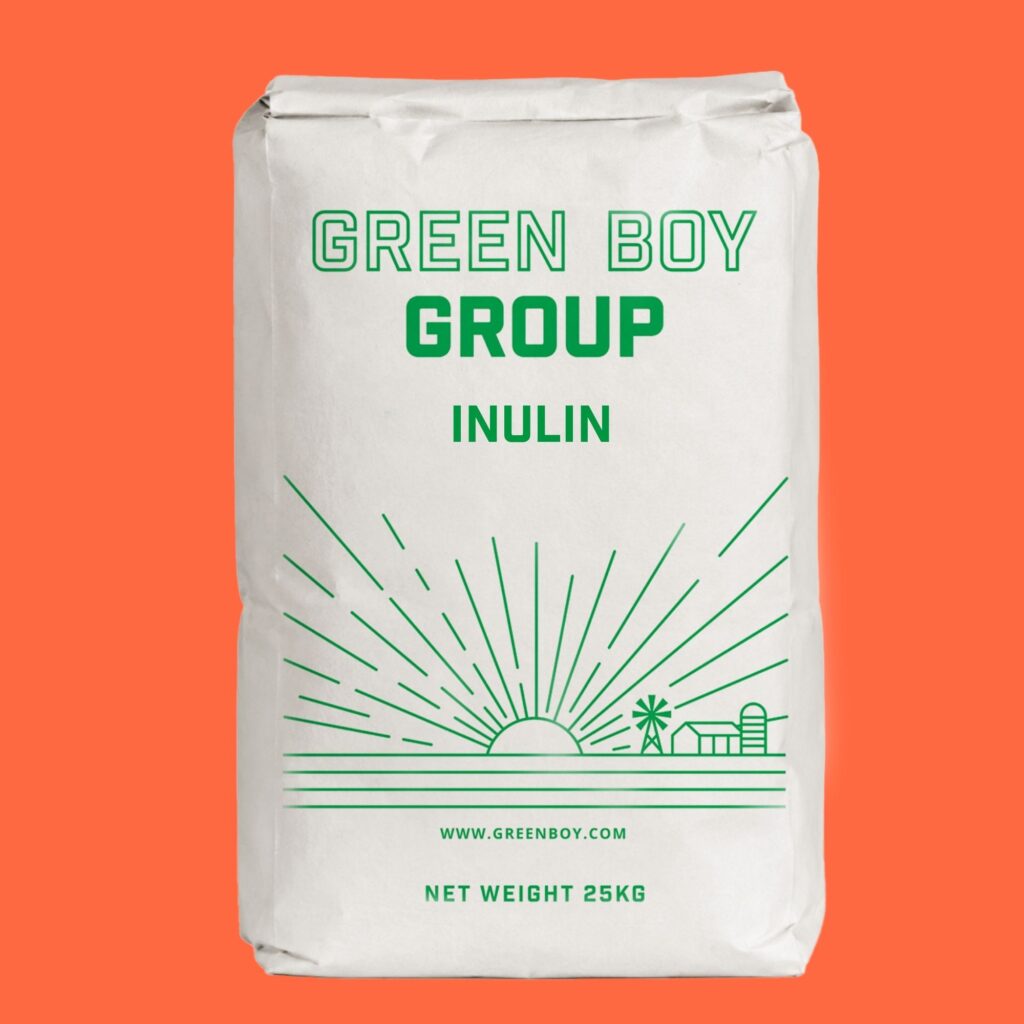
*from Chicory Root Inulin and Jerusalem Artichoke Inulin
What Is Inulin?
Inulin is a naturally occurring soluble dietary fiber found in plants such as chicory root, Jerusalem artichoke, and agave. It is composed of fructose-based oligosaccharide chains that resist digestion in the upper gastrointestinal tract and function as a prebiotic fiber in food systems.
Inulin is widely used in food manufacturing as a fiber enrichment ingredient, fat replacer, and texture modifier. It is especially common in clean-label, plant-based, and reduced-sugar formulations where manufacturers want to improve nutritional profile without significantly impacting taste or processing performance.
At Green Boy, we offer Inulin Non-GMO to support manufacturers developing functional foods, nutrition products, dairy alternatives, baked goods, and beverage systems.
Functionalities
Inulin provides multiple functional benefits that make it a highly versatile ingredient in modern food formulation.
Fiber Enrichment
Inulin is primarily used to increase dietary fiber content and support “source of fiber” or “high fiber” nutritional positioning depending on formulation levels.
Prebiotic Functionality
Inulin serves as a prebiotic fiber, supporting beneficial gut bacteria by selectively fermenting in the colon.
Fat Replacement
Inulin can mimic some of the mouthfeel and creaminess of fats, making it useful in reduced-fat dairy alternatives, baked goods, and spreads.
Texture Improvement
It contributes smoothness, body, and cream-like texture in liquid and semi-solid food systems.
Bulking Agent
Inulin provides bulk in reduced-sugar and fiber-enriched formulations without significantly increasing sweetness.
Moisture Management
In baked goods, inulin helps retain moisture, improving softness and shelf life.
Stability Support
It can help stabilize emulsions and improve consistency in processed food systems.
Significance of Inulin in Food Manufacturing
Inulin is widely used in modern food formulation due to its dual role as a functional fiber and texture modifier. Unlike insoluble fibers, inulin integrates smoothly into many food systems without gritty texture, making it especially valuable in beverages, dairy alternatives, and nutrition products.
It is also commonly used in plant-based and reduced-sugar systems where manufacturers are looking to improve fiber content while maintaining taste and mouthfeel. Inulin is a key ingredient in gut-health-focused and functional nutrition products.
At Green Boy, we position inulin as a multifunctional fiber ingredient that supports both nutritional enhancement and sensory performance in clean-label formulations.
Texture and Taste
Texture
Inulin plays a key role in improving texture across a wide range of applications. Manufacturers commonly use it to:
- Improve creaminess in dairy alternatives
- Enhance smoothness in beverages
- Add body in reduced-fat formulations
- Improve softness in baked goods
- Support texture in nutrition bars and gels
Taste
Inulin has a mild, slightly sweet flavor profile depending on chain length.
Typical sensory characteristics include:
- Mild sweetness
- Clean finish
- Neutral to slightly creamy taste
- Minimal aftertaste
Certifications
Non-GMO Inulin
We also offer Non-GMO Inulin to support ingredient transparency and clean-label positioning in modern food manufacturing.
Additional Certification Options
Depending on specification, Inulin may also be available with:
- Vegan
- Kosher
- Halal
- Gluten-Free
Applications
Inulin is commonly used in:
- Dairy alternatives (yogurt, milk, creamers)
- Nutrition and protein bars
- Functional beverages
- Baked goods
- Reduced-sugar formulations
- Frozen desserts
- Spreads and emulsions
- Dietary fiber supplements
- Plant-based foods
- Clean-label functional foods
At Green Boy, we supply Non-GMO Inulin to support fiber enrichment, fat replacement, texture development, and clean-label formulation performance across a wide range of food manufacturing applications.