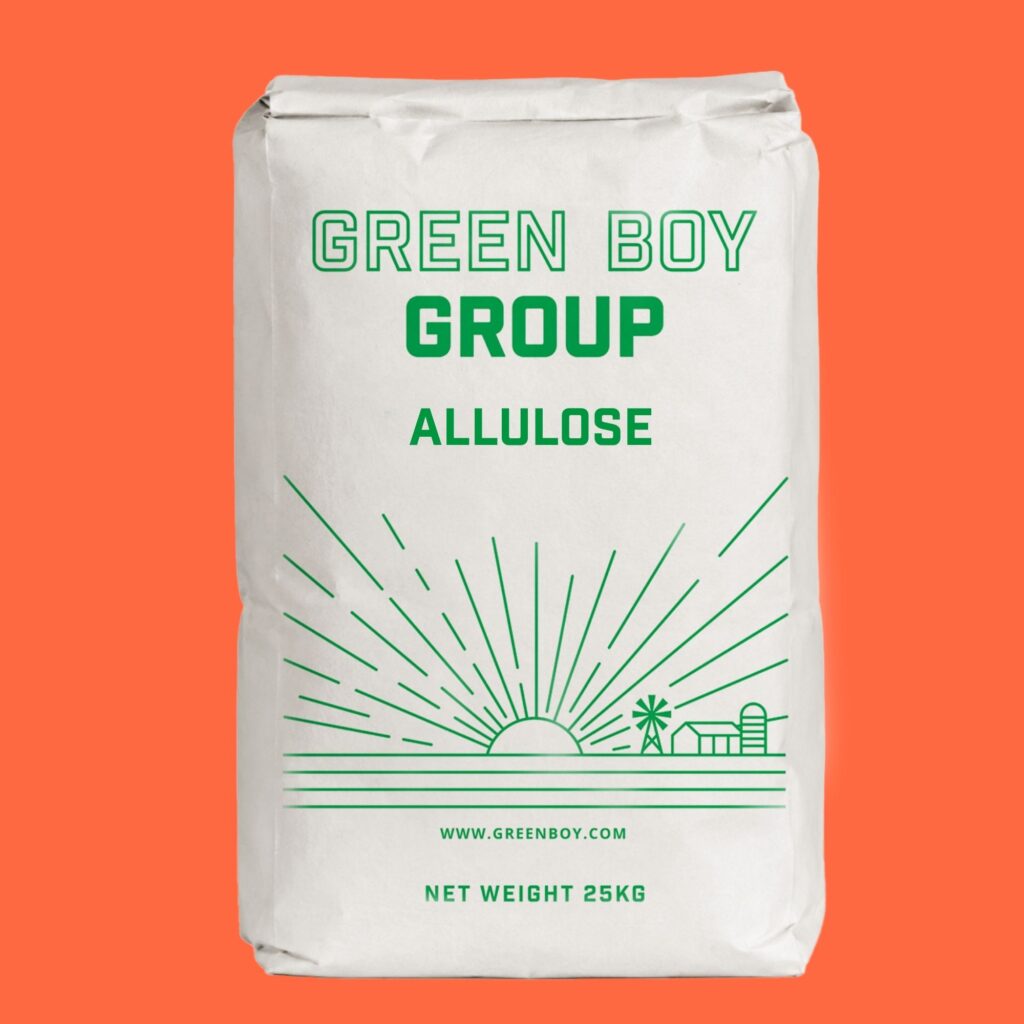
What Is Allulose?
Allulose is a rare sugar that occurs naturally in small amounts in foods such as figs, raisins, wheat, and maple syrup. Commercially, allulose is produced through an enzymatic conversion process that transforms fructose into allulose, resulting in a sweetener that closely resembles the taste and functionality of sucrose while contributing significantly fewer calories.
Approximately 70% as sweet as traditional sugar, allulose has become an increasingly popular ingredient for manufacturers developing reduced-sugar, low-calorie, and better-for-you food and beverage products. Unlike many high-intensity sweeteners, allulose provides bulk, browning, and texture similar to sugar, making it an effective replacement in numerous formulations.
At Green Boy, we offer Non-GMO Allulose in both powder and syrup formats to support manufacturers developing innovative products with reduced sugar content while maintaining the functionality consumers expect from traditional sweeteners.
Functionalities
Allulose offers several unique functional benefits that distinguish it from many alternative sweeteners.
Sugar Reduction
Allulose is commonly used to reduce added sugars while maintaining sweetness, bulk, and product functionality. It enables manufacturers to formulate products with lower sugar content without sacrificing texture or eating quality.
Sweetening
Providing approximately 70% of the sweetness of sucrose, allulose delivers a clean, sugar-like sweetness with minimal aftertaste, allowing it to be used alone or alongside other sweeteners to achieve desired sweetness levels.
Browning & Caramelization
Unlike many sugar substitutes, allulose participates in Maillard browning reactions during baking and cooking. This allows manufacturers to achieve desirable color development, caramelization, and flavor in baked goods and confectionery products.
Texture Development
Allulose contributes body, mouthfeel, and bulk similar to traditional sugar. It helps maintain product texture in applications such as baked goods, frozen desserts, sauces, and nutritional products.
Moisture Retention
Allulose exhibits humectant properties that help retain moisture in finished products. This functionality can improve softness, freshness, and shelf life in baked goods, bars, and confectionery.
Freezing Point Depression
Allulose lowers the freezing point of formulations, making it particularly valuable in frozen desserts where it helps create smoother textures and reduces ice crystal formation.
Processing Stability
Allulose performs well under common food manufacturing conditions, including baking, pasteurization, extrusion, and thermal processing.
Why Choose Allulose Over Traditional Sugar?
As consumer demand for reduced-sugar foods continues to grow, manufacturers face the challenge of lowering sugar content without compromising product quality. While many alternative sweeteners provide sweetness, they often lack the functional properties that make sugar such an effective ingredient.
Allulose offers many of the same functional benefits as sucrose—including bulk, browning, moisture retention, and mouthfeel—while contributing significantly fewer calories and less impact on blood glucose compared to traditional sugar. This makes it an excellent solution for manufacturers seeking to reformulate products while preserving texture, appearance, and sensory performance.
At Green Boy, we supply Non-GMO Allulose to help manufacturers develop next-generation food and beverage products that meet evolving consumer preferences for reduced sugar and clean-label ingredients.
Texture and Taste
Texture
One of allulose’s greatest advantages is its ability to closely replicate the functionality of sugar.
Food manufacturers commonly use allulose to:
- Improve softness in baked goods
- Enhance creaminess in frozen desserts
- Maintain chewiness in nutrition bars
- Provide body in beverages
- Improve mouthfeel in reduced-sugar formulations
Because it behaves similarly to sucrose, allulose often requires fewer formulation adjustments than high-intensity sweeteners.
Taste
Allulose is widely recognized for its clean sensory profile.
Typical sensory characteristics include:
- Clean sugar-like sweetness
- Approximately 70% the sweetness of sucrose
- Minimal aftertaste
- Mild cooling sensation at higher inclusion levels
- Clean finish
Its flavor profile makes it suitable for a broad range of sweet applications without the bitterness or lingering aftertaste associated with many artificial or natural high-intensity sweeteners.
Certifications
Non-GMO Allulose
Green Boy offers Non-GMO Allulose to support manufacturers seeking ingredient transparency and clean-label product positioning. Our allulose ingredients are suitable for a wide variety of food and beverage applications focused on sugar reduction.
Available Formats
Green Boy offers Allulose in multiple formats to meet formulation requirements, including:
- Powder
- Syrup
Additional Certification Options
Depending on product specifications and market requirements, Allulose may also be available with certifications such as:
- Kosher
- Halal
- Gluten-Free
Our team can help identify the appropriate specification and certification requirements for your formulation and target market.
Applications
Allulose is commonly incorporated into:
- Reduced-sugar beverages
- Protein powders
- Nutrition and protein bars
- Baked goods
- Cookies and cakes
- Ice cream and frozen desserts
- Dairy alternatives
- Chocolate and confectionery
- Sauces and syrups
- Functional foods
- Nutritional supplements
At Green Boy, we work with food and beverage manufacturers to supply Non-GMO Allulose in both powder and syrup formats that support sugar reduction, texture development, and formulation performance across a wide range of commercial applications.